24 Oct 2026
Policy Transformations Reshaping How Resources Are Assigned in Growing Infrastructure Networks
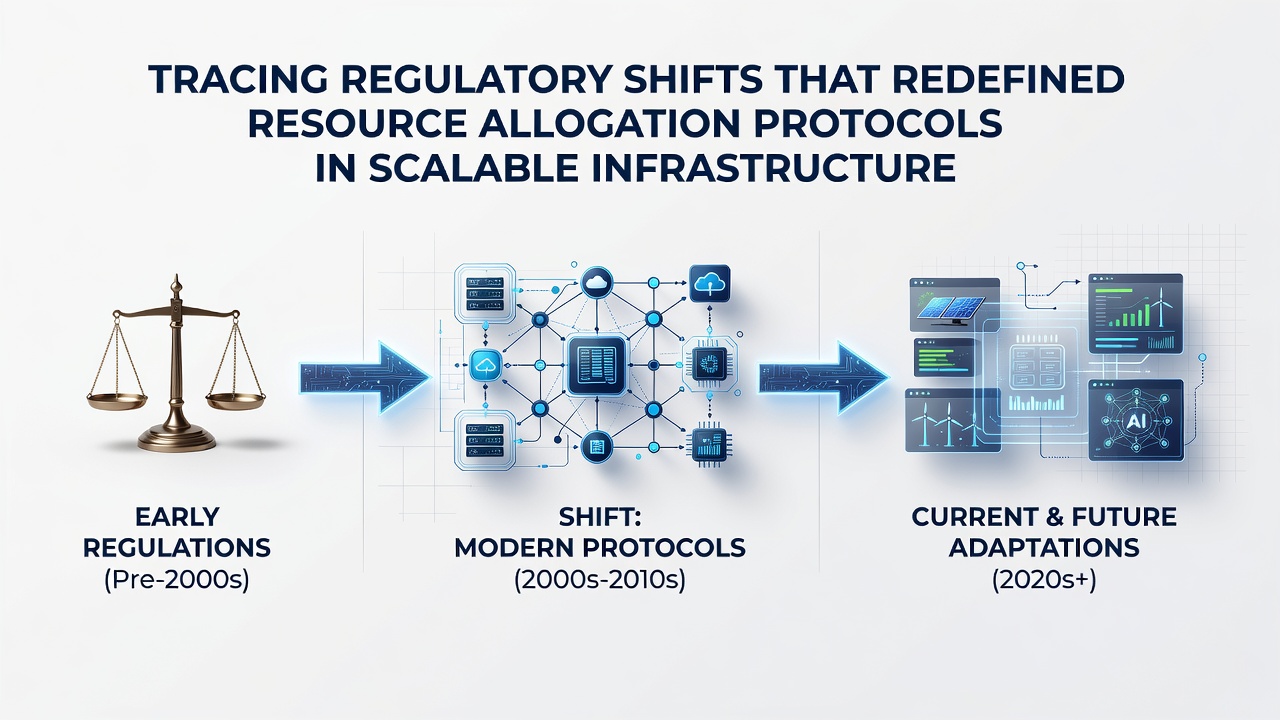
Regulatory frameworks around the world have undergone multiple revisions since the early 2010s, each change altering how organizations assign compute, storage, and network capacity inside large-scale systems. Governments introduced new compliance layers focused on energy consumption, data residency, and cross-border transfer limits, which forced operators to redesign allocation algorithms and capacity planning models. Data from the European Commission shows that directives adopted between 2018 and 2023 produced measurable shifts in how European data centers prioritized workloads during peak demand periods.
Those early adjustments centered on transparency requirements that obliged providers to disclose power usage effectiveness metrics and carbon intensity figures. Operators responded by embedding these constraints directly into their scheduling software, so that resource requests now carry environmental cost scores alongside traditional performance indicators. Researchers at several technical universities documented the resulting changes in queue management and priority queuing systems that became standard practice by 2024.
Key Milestones in North American and European Rulemaking
North American regulators followed a different sequence, concentrating first on grid stability and then on supply-chain security. Updates issued by the U.S. Department of Energy in 2022 required detailed reporting on backup power systems and water consumption for cooling, prompting operators to revise their allocation protocols so that high-intensity workloads could be shifted to facilities with surplus renewable capacity. Canadian authorities introduced parallel measures in 2023 that tied provincial tax incentives to documented improvements in resource efficiency, creating additional variables that allocation engines had to weigh in real time.
European updates continued to emphasize data localization. The 2024 refinement of cross-border data flow rules expanded the list of approved jurisdictions and introduced audit trails that must accompany every resource migration event. Infrastructure teams therefore modified orchestration layers to log jurisdiction tags at the moment of allocation rather than during post-processing, a procedural change that reduced compliance review times according to industry reports.
Technical Adjustments Inside Allocation Protocols
Allocation protocols themselves evolved from simple first-come-first-served models to multi-objective optimization routines that incorporate regulatory scores. Engineers integrated constraint solvers that evaluate each new workload against current policy thresholds for energy, latency, and residency before granting resources. One widely cited study from an Australian research consortium demonstrated that these solvers cut the frequency of post-allocation compliance corrections by more than 40 percent when measured across a twelve-month period ending in mid-2025.
Capacity forecasting tools also received updates. Instead of projecting demand solely from traffic patterns, forecasters now ingest regulatory calendars so that anticipated rule changes can influence procurement decisions months in advance. Observers note that several large operators adjusted their hardware refresh cycles in 2025 specifically to align with expected tightening of efficiency thresholds scheduled for October 2026.
Regional Variations and Their Operational Consequences
Asia-Pacific jurisdictions introduced their own timelines. Singapore’s Infocomm Media Development Authority released updated guidelines in late 2024 that require explicit carbon accounting for every virtual machine instance, while Japan’s Ministry of Economy, Trade and Industry focused on disaster-resilience metrics that affect how failover capacity is pre-allocated. Operators serving multiple regions therefore maintain separate policy engines that feed into a unified orchestration platform, ensuring each jurisdiction’s constraints remain isolated yet visible to central planners.
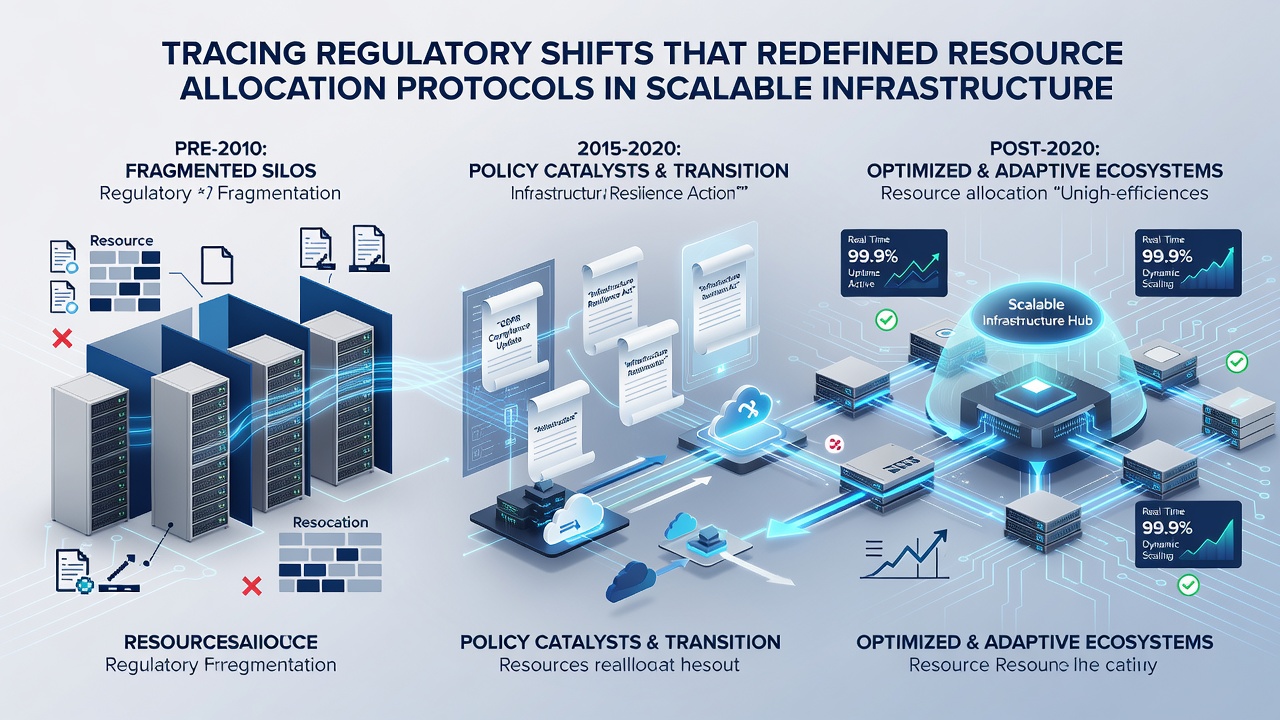
These layered requirements have produced measurable effects on utilization rates. Facilities that once maintained 75 percent average occupancy now operate closer to 82 percent because allocation algorithms can safely pack workloads more densely when regulatory risk scores are calculated automatically. Industry associations tracking these metrics across 180 sites reported the shift in a 2025 benchmark study.
Looking Ahead to October 2026 Implementation Dates
Several pending rules carry explicit effective dates in October 2026. The most consequential of these updates will require real-time disclosure of resource allocation decisions whenever they affect protected data categories. Preparation work already visible in operator roadmaps includes expanded logging pipelines and new APIs that surface allocation rationales to external auditors within minutes of each decision. Organizations that have completed pilot implementations report that the additional telemetry increases storage overhead by roughly 8 percent but reduces audit preparation time substantially.
Training programs for operations staff have begun incorporating these forthcoming requirements, focusing on how to interpret policy scores when manual overrides become necessary. Professional development modules now include case examples drawn from earlier rule changes so that teams can recognize patterns in how regulators evaluate compliance evidence.
Conclusion
Regulatory evolution continues to drive incremental redesigns inside the software that governs resource distribution across scalable infrastructure. Each wave of updates adds new variables to allocation logic, changes reporting obligations, and influences long-term capacity planning. Organizations that maintain flexible policy engines and maintain close awareness of implementation calendars have demonstrated the ability to absorb these shifts with limited disruption to service levels. The pattern established through successive revisions indicates that future adjustments will continue to reward systems capable of evaluating regulatory constraints at the moment of allocation rather than afterward.